
Automated, Remote-Managed Irrigation for a Community-Run Facility
Jabiru Golf Club is a nine-hole course situated in the heart of Kakadu National Park. As a volunteer-run organisation, the club offers a relaxed tropical golfing experience but faced significant challenges maintaining turf quality due to an ageing, manual watering process. Think Water Darwin was engaged to design and install an automated irrigation system for the greens and tee boxes that could withstand the remote Northern Territory climate while working within the club’s annual water allocation.
Before the upgrade, the club relied on manual watering, which led to inconsistent turf health and placed an unsustainable labour demand on the community. There was no existing infrastructure to support automation, and the remote location made traditional wired systems expensive to install and difficult to maintain. The club required a solution that was reliable, easy to manage remotely, and provided a foundation for future course expansion while carefully managing their allocated water usage.
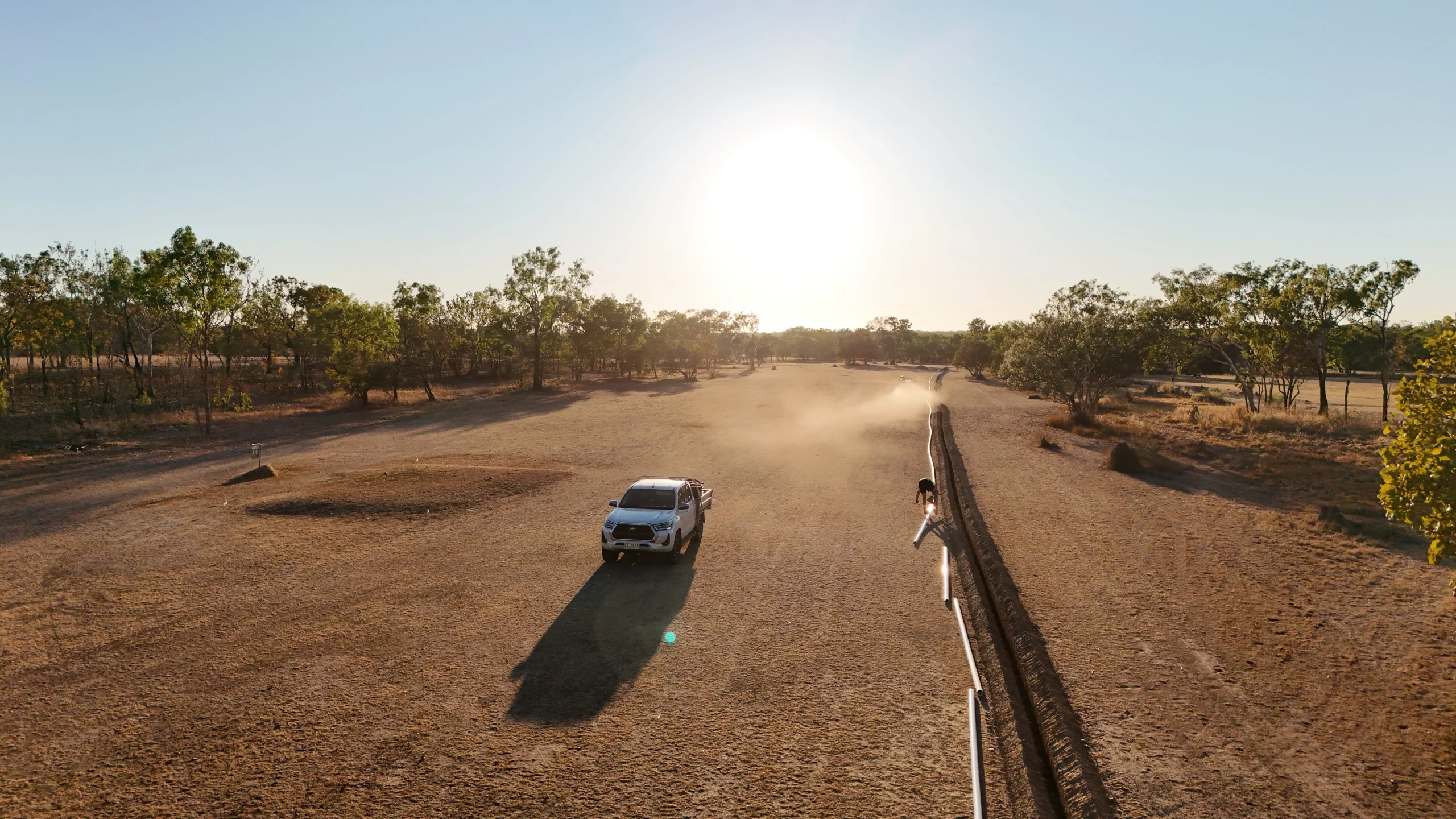
To make the project viable within a limited budget, we utilised a collaborative delivery model. A practical and scalable irrigation system was designed to balance high performance with long-term reliability. The club secured external grant funding and supported the project by providing volunteer labour for the trenching components and accommodation for our project team.
This partnership allowed us to focus the budget on high-quality solutions engineering and specialist infrastructure, ensuring the club received a system designed specifically for remote Northern Territory conditions.
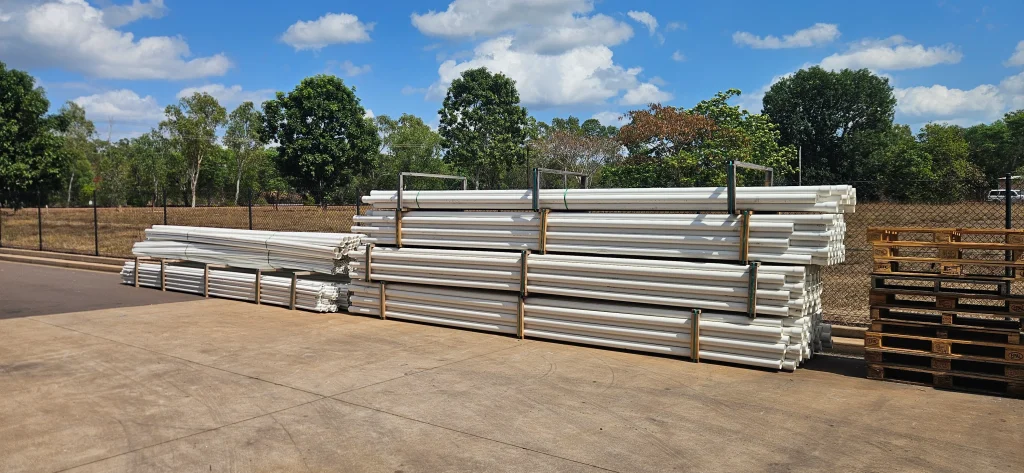
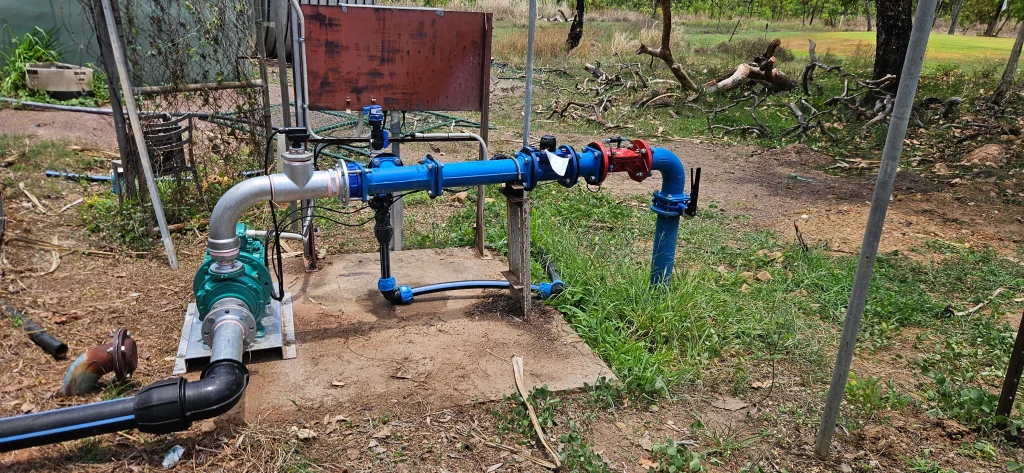
The system is supplied by mains water which feeds into a dedicated water tank compound. From there, the water is pumped out to the course via a Pentair Southern Cross Starline booster pump system. We installed a soft-starter panel to allow for a gradual pressure ramp-up, which protects the pipework from water hammer. For added protection, the system includes integrated no-flow and low-level cut-outs. The mainline consists of 80mm PVC, engineered with built-in redundancy to support future expansion across the rest of the course.
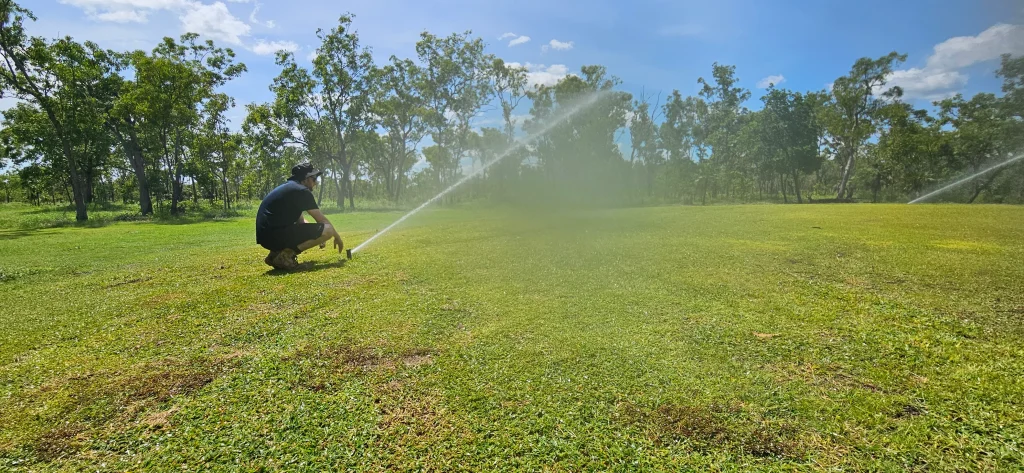
The distribution network uses 50mm, 40mm, and 25mm laterals, feeding Rain Bird 8005 series sprinklers on the greens and 5004 series on the tee boxes. These are operated by Rain Bird PGA series valves with DC latching solenoids. To eliminate the cost and fault risk of extensive underground wiring, we utilised a Gator radio system to link the Rain Bird LXME2 controller to the valves via radio communication.
Management of the course is now fully handled through remote connectivity, allowing for real-time adjustments and diagnostics from a desktop or mobile device. This is particularly valuable for a volunteer-run club, as the system can be monitored remotely or on-site. We integrated a pulse-output flow meter with the controller to track water usage per zone against the club’s annual allocation.
This system automatically flags any flow variance of 20% or more, enabling the early detection of leaks or damaged sprinklers. This reduces water waste and ensures issues are identified without requiring constant manual intervention from the club’s volunteers.
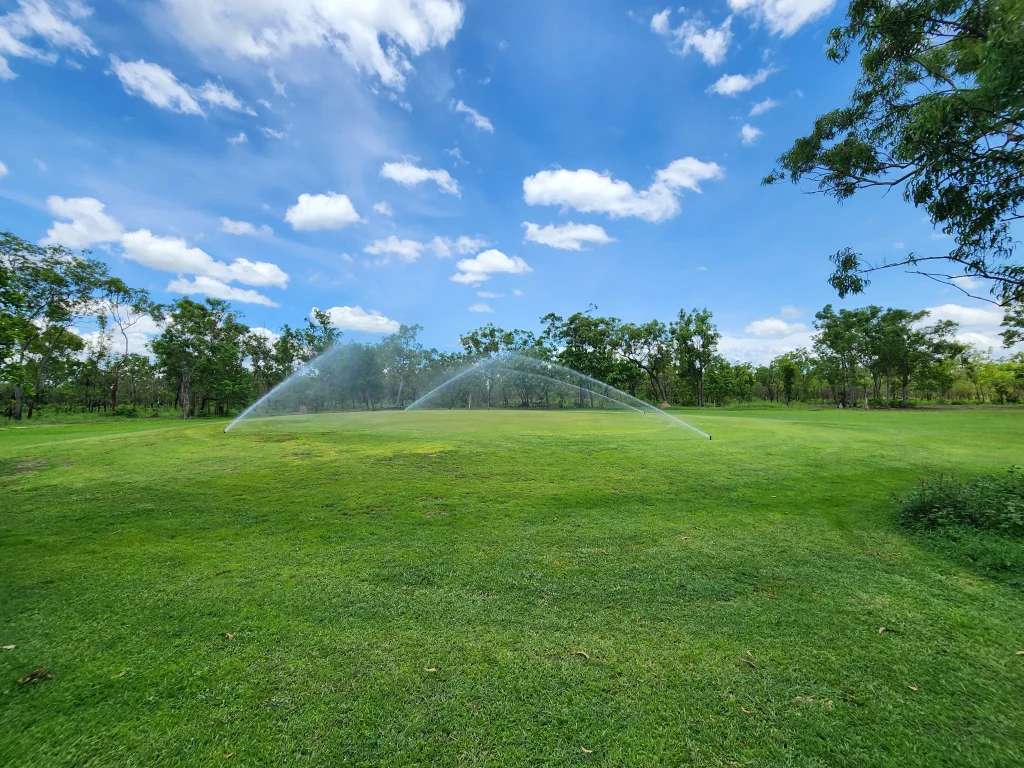
The project successfully delivered a fully automated irrigation network across all nine greens and tee boxes. By moving away from manual watering, the club has seen a marked improvement in turf consistency and course presentation.
The remote monitoring capabilities on mobile and desktop ensure the system remains operational with minimal hands-on effort from the local volunteers. Through smart design and a partnership-based approach, Jabiru Golf Club now has professional-grade infrastructure built to thrive in remote Northern Territory conditions, with infrastructure in place for future expansion.
Interested in learning more or after guidance for your own project? Contact the team today!